
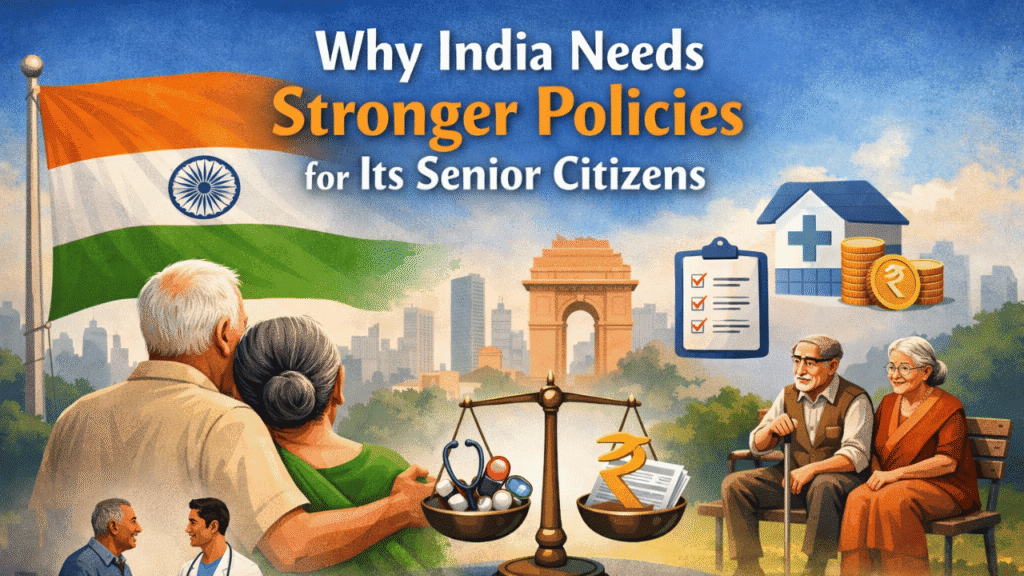
India is a country that deeply values its traditions, culture, and familial bonds. Yet, when it comes to the elderly population—our parents, grandparents, and elders who once formed the backbone of our families and communities—we often fall short in offering them the dignity, care, and protection they deserve. Despite having laws and policies in place, the ground reality is far from reassuring.
The Growing Elderly Population
As per recent estimates, India’s elderly population (aged 60 and above) is expected to rise to over 300 million by 2050. This demographic shift demands a strong, responsive, and compassionate system that can ensure their well-being. However, in many cases, the elderly are left to fend for themselves—neglected, abused, or without access to proper healthcare, shelter, or social security.
Existing Policies: A Good Start, But Not Enough
One of the key legislations in India aimed at protecting senior citizens is the Maintenance and Welfare of Parents and Senior Citizens Act, 2007. While it legally mandates children and relatives to take care of their elders, its implementation remains weak. Many seniors are unaware of their rights, and even those who are aware hesitate to take legal action against family members due to emotional and social pressures.
There are other schemes like:
Indira Gandhi National Old Age Pension Scheme
Rashtriya Vayoshri Yojana (providing assistive devices)
National Programme for the Health Care of Elderly (NPHCE)
However, access to these schemes is riddled with bureaucratic delays, lack of awareness, and insufficient infrastructure—especially in rural areas.
The Policy Gaps
While intent exists on paper, implementation lags behind. Here’s why:
Poor awareness among the elderly about their rights and available schemes
Inadequate allocation of funds in government budgets for elderly welfare
Lack of monitoring and accountability mechanisms
Limited healthcare facilities dedicated to geriatric care
Insufficient protection against elder abuse—both physical and financial
Why Stronger Advocacy is Crucial
This is where organizations like our Foundation step in. We believe that policy-level changes and budgetary allocations must be driven by data, dialogue, and demand. Advocacy is not just about raising a voice—it’s about creating a movement that influences lawmakers, sensitizes society, and drives systemic reform.
Our efforts are focused on:
Highlighting policy gaps through research and data
Engaging with government authorities and lawmakers
Running campaigns to create public awareness
Empowering senior citizens to claim their rights.
India’s elderly deserve more than respect—they deserve action. It’s time we look beyond token gestures and work towards a sustainable, inclusive, and caring system for our senior citizens.
We invite you to join us in this mission. Support our campaigns, amplify our voice, and advocate for those who once advocated for us.